True Moon Short Drama Verdict A Werewolf Romance Done Right
After enough werewolf micro-dramas, the visual fatigue is real. One cheap wolf transformation after another, shaky CGI fur, glowing eyes pasted onto a face, and suddenly a supposedly dangerous supernatural world looks like a rushed mobile-game cutscene. That is why true moon short drama deserves a closer look, especially when the production has to compensate for limited visual effects with acting, lighting, sound, and chemistry.
There is also a naming detail worth clearing up before the recap. The series officially indexed by ReelShort is True Luna, not True Moon. It premiered in 2023, has 62 episodes, and stars Grace Woods Swanson as Emma Parker and Nicholas René Rodriguez as Logan Carter. IMDb classifies it as a micro-drama, fantasy, horror, and romance series.
That distinction matters because searches for “True Moon” also bring up unrelated projects. The ReelShort series is the one this review examines.
Rather than judging it only by whether the werewolf effects look expensive, the better question is whether the production makes the fantasy world believable enough for viewers to care about Emma and Logan.
True Moon Short Drama Builds Its Fantasy Around Emma Parker
Emma Parker’s story starts on her eighteenth birthday, when she finally receives her wolf, Eliza. What should be a straightforward coming-of-age moment immediately becomes something much bigger.
The Moon Goddess warns Emma that dangerous forces are coming for her power. Soon afterward, Emma discovers that her fated mate is Logan Carter, the Alpha of the Crescent Moon pack and the man she has secretly cared about for years. The happiness does not last. Logan rejects her for another she-wolf, leaving Emma confused and emotionally exposed.
That rejection is not simply a romance obstacle. It becomes the first major piece of the show’s larger mythology.
Emma Parker Is More Interesting After The Rejection
Emma begins as someone who wants acceptance from the person she loves. That makes her early disappointment easy to understand.
The story then gives her a reason to stop defining herself through Logan.
Her rare red wolf, Eliza, is connected to the identity of the True Luna, a supernatural position associated with extraordinary power. ReelShort’s own material describes Emma as possessing a rare red wolf while facing the threat of the Rogue King.
This is where the character arc becomes more conventional but also more satisfying.
The rejected girl is not actually powerless.
She simply has not discovered what she is capable of yet.
Logan Carter’s Rejection Is The Central Romantic Conflict
Logan is deliberately frustrating.
He is attracted to Emma, knows that she matters to him, and still chooses to reject her. The explanation is partly connected to his belief that Emma is too inexperienced and vulnerable to survive the dangers surrounding her.
That creates the classic push-pull dynamic of the genre.
The problem is that Logan’s protective reasoning can easily feel patronizing. The story therefore has to rely on Nicholas René Rodriguez’s performance to make Logan’s internal conflict believable rather than making him look like another generic Alpha who changes his mind whenever the plot requires it.
IMDb lists Rodriguez as Logan Carter alongside Grace Woods Swanson as Emma.
The Rogue King Raises The Stakes Beyond Romance
Without the external threat, the story could become another rejection-and-reconciliation romance.
The Rogue King prevents that.
Emma’s power makes her strategically valuable, turning the romance into part of a larger supernatural conflict. The official synopsis explains that dangerous people pursue Emma after Logan rejects her, while the Rogue King wants her power for his own purposes.
That gives Emma a practical reason to develop rather than simply waiting for Logan to regret his decision.
Sixty Two Episodes Give The Story Room To Stretch
The official ReelShort catalog lists 62 episodes.
For a short drama, that is substantial.
It allows the series to divide its story into several stages:
- Emma discovering her wolf
- The fated-mate reveal
- Logan’s rejection
- Emma learning about her abilities
- The growing supernatural threat
- Logan’s changing attitude
- The conflict surrounding Emma’s power
The downside is equally obvious. Sixty-two short episodes create plenty of opportunities for repetition and cliffhanger padding.
That is the first place where the show’s pacing needs to be judged carefully.
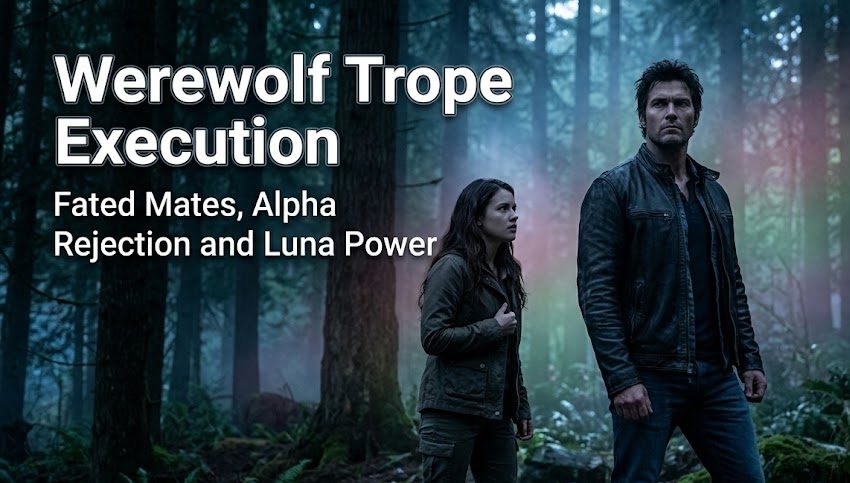
Werewolf Trope Execution Keeps The Romance Moving
Werewolf romance is one of the most formula-heavy corners of short drama. You usually get an Alpha, a Luna, a fated mate, rejection, pack hierarchy, forbidden attraction, supernatural powers, and eventually a dramatic reversal.
The werewolf trope execution in True Luna is therefore not revolutionary. Its strength comes from how quickly it establishes those familiar pieces.
The series does not waste much time explaining what kind of story viewers are entering.
The Fated Mate Reveal Works Because Emma Already Wants Logan
The fated-mate trope becomes more effective when the romantic connection existed before the supernatural confirmation.
Emma already has feelings for Logan. When the Moon Goddess identifies him as her mate, the revelation validates something Emma already wanted.
Then Logan rejects her.
That creates immediate emotional contradiction.
She has been given exactly what she wanted and loses it almost immediately.
The True Luna Identity Gives Emma A Second Story
If Emma’s only purpose were becoming Logan’s mate, the character would be dangerously dependent on the romance.
The True Luna mythology gives her another direction.
She has to understand her own power, confront the danger surrounding her, and figure out what her supernatural identity means.
That makes the fantasy element more than decorative wallpaper.
Rejection Is Used As Character Fuel
Rejected-mate stories can become repetitive when the heroine spends dozens of episodes waiting for the Alpha to apologize.
True Luna works better when Emma’s rejection becomes motivation.
She is hurt, but the story gradually shifts attention toward what she can do.
That is an important difference between a character arc and a romantic loop.
The Alpha Is Not Allowed To Remain Emotionally Static
Logan’s biggest challenge is convincing viewers that his changing behavior comes from character development.
He initially believes rejecting Emma is the responsible decision. Later, his protective instincts become harder to separate from romantic attachment.
That creates tension, but it also puts pressure on the performance.
If Logan’s emotional transitions are too abrupt, the romance becomes mechanical.
If they are gradual, the familiar trope becomes much easier to invest in.
Visual Effects Critique Reveals Where The Budget Falls Short
The biggest weakness in fantasy micro-drama is usually not the concept.
It is the visual execution.
Werewolf transformations are expensive-looking moments even when the production budget is modest. Fur, anatomy, movement, lighting, compositing, and digital environments all have to work together.
A weak transformation can destroy immersion in seconds.
The good news is that True Luna does not need every scene to look like a theatrical fantasy blockbuster. The production can be effective simply by knowing when not to show too much.
That is the core of a useful visual effects critique.
Suggestion Can Be Better Than Showing A Full Transformation
Fantasy directors often have two choices.
Show the entire creature.
Or imply what is happening through sound, shadows, reactions, and fragments.
For a short drama with limited resources, the second approach can be smarter.
A sudden growl followed by a character’s frightened reaction can sometimes feel more convincing than an obviously digital wolf appearing in full frame.
The audience completes the image in its own head.
Lighting Helps Sell The Supernatural World
Werewolf stories naturally benefit from nighttime environments, moonlight, forests, mist, and strong silhouettes.
Those elements are not merely aesthetic.
They hide visual limitations.
Darkness can reduce the amount of detail required from practical sets and CGI. Backlighting can turn a simple figure into something mysterious. Blue or silver moonlight can establish a supernatural mood without requiring an elaborate digital environment.
That is where directing becomes more important than raw effects quality.
Sound Can Make A Cheap Wolf Feel Dangerous
A growl is not enough.
The best sound design layers footsteps, breathing, distant movement, wind, environmental ambience, and sudden silence.
Silence is particularly effective before a supernatural reveal.
When the soundtrack drops away and the audience hears only breathing, the eventual sound becomes much more powerful.
This technique matters because micro-drama often cannot afford spectacle in every scene. Sound gives the production another way to create scale.
Fantasy Series Review And The Immersive Test
A useful fantasy series review should not ask whether every visual effect looks Hollywood-level.
That is the wrong benchmark for a 62-episode micro-drama.
The better question is whether the individual production choices work together well enough to preserve the illusion.
True Luna benefits from having a story structure that does not depend exclusively on transformations. Emma’s identity, Logan’s rejection, pack politics, and the Rogue King’s interest in her power all create tension even when the supernatural visuals are relatively restrained.
That makes the series more resilient than a fantasy drama built entirely around monster spectacle.
Production Design Needs To Establish Pack Hierarchy
Werewolf stories are partly about social structure.
Alpha.
Luna.
Beta.
Pack members.
Rogue.
These titles only work if the environment and performances communicate who has authority.
A character standing in a room does not automatically look like an Alpha. The performance has to sell the position through posture, voice, eye contact, and how other characters react.
That is where micro-drama can create scale without expensive sets.
Camera Distance Changes The Emotional Temperature
Close-ups are especially useful for Emma and Logan.
A close shot allows the audience to read hesitation, jealousy, fear, or regret.
A wider shot can instead emphasize the hierarchy between characters.
The difference may seem small, but it is exactly the kind of directing choice that determines whether a fantasy scene feels intimate or theatrical.
Editing Has To Respect Emotional Beats
The short format encourages rapid cutting.
That is useful for cliffhangers, but dangerous for romance.
If Emma looks at Logan, Logan looks away, and the scene immediately cuts to another location, the audience understands what happened but does not necessarily feel it.
Romantic tension needs a little breathing room.
That is particularly important because Emma and Logan’s relationship is supposed to carry much of the series.
Romantic Tension Is Strongest When Emma Stops Chasing Logan
The most compelling part of the relationship is not the rejection itself.
It is what happens after Emma begins developing an identity separate from Logan.
That shift creates actual romantic tension.
Logan’s interest becomes more complicated when Emma is no longer simply waiting for his approval.
He rejected someone who genuinely wanted him.
Now he has to confront the possibility that she may become powerful without him.
That reversal is a classic romance mechanism, but it works because it changes the emotional balance.
Emma’s Independence Changes The Power Dynamic
At the beginning, Logan has the social and supernatural authority.
Emma wants his acceptance.
Later, Emma becomes increasingly important because of her own identity.
The power relationship starts moving in the opposite direction.
That gives the romance more bite than a simple “Alpha realizes he loves her” storyline.
Logan’s Protectiveness Is Both Romantic And Problematic
The protective Alpha is a familiar fantasy-romance archetype.
It is attractive when it means genuine concern.
It becomes frustrating when it removes the heroine’s agency.
True Luna works best when Logan’s protection does not completely replace Emma’s ability to make decisions.
She needs to remain an active participant in the story.
Otherwise the romance would undermine the character development the fantasy plot is trying to establish.
The Reconciliation Question Is More Important Than The Rejection
The obvious question is whether Logan regrets rejecting Emma.
But the more interesting question is whether he actually changes.
A satisfying romance cannot end with:
“I was wrong.”
It needs to show why he was wrong and what he learned.
That is the difference between a dramatic apology and genuine character development.
Final Verdict On The True Moon Short Drama
The official title may be True Luna, but the search phrase “true moon short drama” points toward a very specific kind of viewing experience: werewolf romance built around fated mates, rejection, hidden power, and supernatural danger.
And on that level, the series knows exactly what it is doing.
It is not trying to reinvent werewolf fiction.
Instead, it takes familiar ingredients and pushes them quickly through a short-form structure. Emma’s rare red wolf, Logan’s rejection, the True Luna identity, and the Rogue King’s threat give the story enough momentum to move beyond a simple romance.
The strongest element is the character setup.
Emma has something to prove beyond winning Logan back.
The weakest potential point is the usual micro-drama problem: 62 episodes can make even a good premise feel stretched if every emotional beat becomes another cliffhanger.
Visually, viewers should also adjust expectations. This is not a production where expensive CGI should be the main reason to watch. The more interesting test is whether lighting, framing, sound, acting, and editing maintain enough atmosphere to keep the fantasy believable.
The series scores well on that immersive test when it allows its characters to carry the scene.
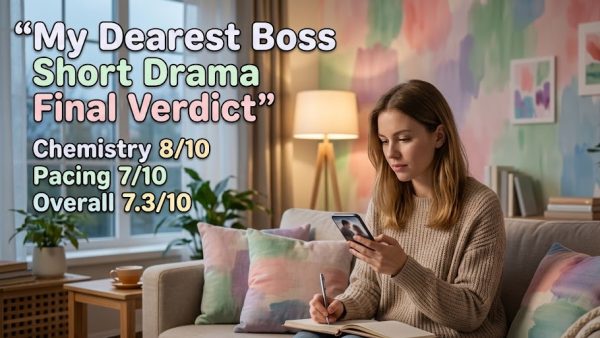
| Category | Verdict |
| Story Hook | 8/10 |
| Emma’s Character Arc | 8/10 |
| Werewolf Tropes | 8/10 |
| Romance | 7.5/10 |
| Visual Effects | 6.5/10 |
| Atmosphere | 7.5/10 |
| Pacing | 7/10 |
| Overall | 7.5/10 |
The final verdict is simple.
True Luna is worth watching if the appeal is the emotional machinery of werewolf romance rather than premium CGI. Its best scenes understand that a fantasy world does not need to look expensive every second. It needs to feel consistent enough that viewers forget they are watching a short-form production.
And when Emma and Logan’s chemistry takes over, that is exactly what happens.
Q&A
Is True Moon the official title of the ReelShort series?
No. The officially indexed ReelShort title is True Luna. The series has 62 episodes and stars Grace Woods Swanson as Emma Parker and Nicholas René Rodriguez as Logan Carter. “True Moon” appears in searches because the story itself uses the concept of a True Luna and moon-related werewolf mythology.
Does Emma become powerful because she is the True Luna?
Yes. Emma’s rare red wolf and True Luna identity are central to the supernatural storyline. Her abilities are initially underdeveloped, which becomes an important part of her character journey as dangerous forces begin targeting her.
Is True Luna mainly a romance or a fantasy drama?
It is both, but the romance drives the emotional core while the fantasy plot raises the stakes. IMDb categorizes the series across micro-drama, fantasy, horror, and romance, while ReelShort highlights its Alpha, Luna, fated-lovers, hidden-identity, and chosen-one elements.


Leave a Reply