Is The DramaBox Subscription Worth It for Heavy Drama Watchers
The cleverest subscription trick is making a monthly fee feel cheaper than every tiny payment that came before it. That is where dramabox subscription worth it becomes a more interesting question than simply asking whether DramaBox has good shows. The real issue is ROI. How many locked episodes will actually be watched, how much would those episodes cost individually, and how often will a supposedly convenient plan turn into another payment after the excitement wears off?
DramaBox sits in a short-drama market where individual episodes, coins, ads, and subscriptions can all coexist. Its catalogue includes plenty of long-running vertical dramas, including titles with 50, 60, 70 or more episodes. That creates the perfect environment for the subscription illusion. A viewer sees dozens of episodes and thinks, “I should subscribe because I’ll save money.”
Maybe.
But only if the maths works.
Is The DramaBox Subscription Worth It For Your Monthly Viewing?
The first thing to understand is that a subscription only creates value when the amount of content you actually consume justifies the fixed cost.
DramaBox’s pricing can vary by country, platform, promotion, and subscription offer. App-market data also shows that short-drama services commonly experiment with daily and seven-day subscriptions, sometimes presenting large discounts that make the effective price harder to judge at a glance. AppMagic’s 2026 mobile-market report lists DramaBox among the major short-drama apps and shows subscription offers around the $19.99 level in its U.S. App Store dataset.
That means the checkout screen on one account should not automatically be treated as the universal DramaBox price.
The 40 Episode Break-Even Rule
Here is the useful calculation.
Suppose a monthly plan costs M and one paid episode effectively costs E when unlocked individually.
The break-even point is:
Break-even episodes = M ÷ E
If the result is 40, watching fewer than 40 paid episodes means the subscription has not mathematically recovered its cost.
For example:
| Monthly Plan | Effective Episode Cost | Break-Even |
| $19.99 | $0.50 | 40 episodes |
| $19.99 | $0.40 | 50 episodes |
| $19.99 | $0.75 | 27 episodes |
| $14.99 | $0.50 | 30 episodes |
| $24.99 | $0.50 | 50 episodes |
This is why the “40 episodes” figure should be treated as a decision threshold, not a universal DramaBox rule. Your actual coin price and offer determine the exact number.
Why A 60 Episode Drama Can Fool You
DramaBox currently lists many dramas with episode counts around 50 to 80. One category page, for example, includes titles with 50, 55, 60, 62, 63, 70 and 79 episodes.
That sounds like incredible value.
But episode count is not the same as viewing value.
If you watch only 12 episodes of a 60-episode series, the other 48 episodes are irrelevant to your ROI.
This is the trap.
A giant catalogue feels valuable even when your actual monthly consumption is tiny.
The Heavy Watcher Gets A Completely Different Deal
Now imagine someone watches:
- 2 episodes a day
- 5 days a week
- 4 weeks a month
That is roughly 40 episodes per month.
At that point, a subscription becomes much easier to justify if the alternative would require buying access to each of those episodes.
But a viewer who watches four episodes every Saturday has a completely different calculation.
That person consumes around 16 episodes per month.
The same subscription could suddenly be poor value.
Unlimited Episode Access Sounds Better Than It Always Is

The phrase unlimited episode access is powerful because it changes the way people think about consumption.
Instead of asking, “Do I want to spend money on this episode?” you start thinking, “I’ve already paid, so I might as well keep watching.”
That psychological shift matters.
The subscription has already converted your money into a sunk cost. Once that happens, watching more content feels free even though your time is not.
The Sunk Cost Problem
Imagine paying $20 for a month.
You planned to watch one drama.
You finish it after three days.
Then you start another because, technically, “it’s already paid for.”
Then another.
Then another.
Suddenly the subscription has not saved time or money. It has simply encouraged you to spend more hours inside the app.
That does not make the subscription bad. It means the value calculation should include time, not just dollars.
A Simple ROI Formula
Use this:
Monthly entertainment ROI = useful viewing value ÷ total subscription cost
You can make “useful viewing value” as practical as possible.
Ask:
- How many paid episodes did I actually watch?
- How much would those episodes have cost individually?
- Did the subscription remove a meaningful paywall?
- Did I watch enough to justify the fixed fee?
- Would I have watched the same amount without subscribing?
That fifth question is sneaky but important.
If the answer is no, the subscription may be creating demand rather than satisfying it.
More Episodes Do Not Automatically Mean Better Value
A 70-episode series can be less valuable to you than a 30-episode series if you only care about the shorter story.
DramaBox’s catalogue is clearly built around volume. Its official listings show numerous dramas running far beyond the length of traditional television episodes.
But quantity is not the same as quality.
The better question is:
How many episodes would I willingly pay to watch this month?
That is your personal demand.
Evaluating Streaming Cost Without Falling For The Monthly Price Illusion
When evaluating streaming cost, do not compare the monthly fee with the total number of episodes available.
Compare it with the episodes you genuinely intend to watch.
This is the same principle you would use with any subscription service. A gym membership is not cheap because the gym has 300 pieces of equipment. It is cheap for you only if you actually use it.
Calculate Your Real Monthly Consumption
Write down your expected viewing.
| Viewer Type | Episodes Per Month | Subscription Logic |
| Casual | 1–10 | Usually difficult to justify |
| Occasional | 11–20 | Compare carefully |
| Regular | 21–39 | Depends on episode price |
| Heavy | 40+ | Subscription becomes much more attractive |
| Extreme binge watcher | 70+ | Strongest case for subscription |
These are not DramaBox’s official thresholds. They are practical budgeting benchmarks based on the 40-episode break-even model.
Why Weekly Plans Can Be Dangerous
Short-drama platforms frequently use short subscription cycles. AppMagic’s 2026 report says more than 70% of revenue for the short-drama apps it analysed came from one-day and seven-day subscription types, with offers sometimes priced surprisingly similarly.
That matters because a weekly plan can feel harmless.
“$19.99 for seven days” sounds temporary.
But if you renew four times, you have spent about $79.96 in a month.
Suddenly the supposedly cheap weekly option is much more expensive than the mental price you registered at checkout.
The Auto-Renewal Question
Before subscribing, check:
- Renewal frequency
- Renewal price
- Introductory price versus regular price
- Whether VIP access changes coin requirements
- Whether your subscription is managed through Apple, Google, or another payment system
- Cancellation deadline
User reviews also show that some DramaBox customers have been confused by recurring subscription charges or by the distinction between VIP access and additional coin purchases.
That does not mean every subscription behaves badly.
It means the billing screen deserves the same attention as the drama itself.
Compare The Plan With Buying Episodes
Suppose your monthly plan is $19.99.
If buying the episodes you genuinely want would cost $8, the subscription loses.
If they would cost $35, the subscription wins.
That is the entire argument.
The catalogue can contain 10,000 dramas and the maths still does not change.
Paywall Bypass Strategy Without Turning It Into A Scam
A sensible paywall bypass strategy does not mean hacking the app or downloading an unofficial version.
It means using the legitimate free options before spending money.
DramaBox’s ecosystem includes free viewing mechanisms and advertisements, while individual app-store reviews indicate that some users can unlock episodes through ads rather than paying coins every time.
So before subscribing, try this sequence.
Start With The Free Episodes
Many short-drama platforms allow viewers to watch an initial portion of a series before asking for payment.
That gives you something extremely valuable.
Information.
You can find out whether the story is actually good before spending anything.
Do not subscribe because the thumbnail looks dramatic.
Watch enough to decide whether the cliffhanger is worth your money.
Use Ads When The Trade Makes Sense
If an advertisement gives you access to another episode, the trade is simple.
You exchange:
time → access
That can be a better deal than exchanging:
money → access
for a casual viewer.
The downside is obvious. Ads interrupt the story and can become exhausting during a long binge.
So there is a point where paying becomes more convenient.
Use Your Coins Strategically
If you already have coins, do not automatically spend them on the first locked episode.
Save them for:
- The final episodes
- Major cliffhangers
- A series you already know you enjoy
- Episodes unavailable through current free options
This turns coins into a backup rather than your default payment method.
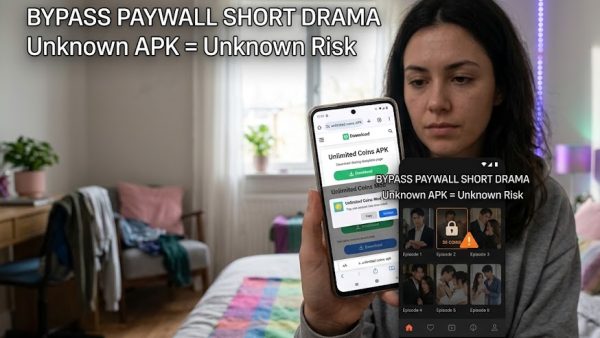
Never Confuse A Hack With A Free Option
There is a huge difference between an official reward and an unofficial “unlimited coins” website.
The latter can expose your account, payment information, or device to unnecessary risk.
A good subscription analysis should reduce spending without creating a bigger problem.
That is why legitimate free viewing options are part of the calculation.
Premium Account Review For Heavy Drama Watchers
A useful premium account review should judge convenience as well as cost.
For a heavy viewer, premium access can remove the constant interruption of ads and reduce the friction of unlocking episode after episode.
That has genuine value.
But it still does not make every subscription automatically worthwhile.
Best Case Scenario For A Subscriber
You are probably a good candidate when:
- You watch 40+ paid episodes monthly
- You regularly finish multiple dramas
- You dislike ad interruptions
- You already know you like DramaBox’s catalogue
- The subscription price is lower than your normal coin spending
- You understand the renewal terms
This is where the subscription starts functioning like a genuine entertainment budget.
Worst Case Scenario For A Subscriber
Be careful if:
- You only watch one drama occasionally
- You stop watching once the initial hype disappears
- You mainly use free episodes
- You subscribe because of a temporary discount
- You forget recurring payments
- You still need to buy lots of coins after subscribing
That last point is particularly important.
A subscription should not be judged by the word “VIP” alone.
Look at what it actually unlocks for your account.
The Heavy Watcher Verdict
If you genuinely consume more than the 40-episode break-even threshold and your plan gives you meaningful access to those episodes, subscribing can make financial sense.
If you watch fewer than 40 paid episodes, the maths becomes much harder to defend under the example model.
That does not mean the subscription is universally a waste.
It means your own episode consumption is the deciding variable.
And that is the part subscription marketing tends to make easy to forget.
So Is DramaBox Worth Paying For?
For a serious binge watcher, dramabox subscription worth it can have a very different answer than it does for someone who opens the app twice a month.
The strongest case for paying is simple: you already know you will watch enough paid content to beat the break-even point.
The weakest case is equally simple: you are paying for the possibility of watching.
Before subscribing, calculate your last 30 days.
If you watched 8 paid episodes, do not let a giant catalogue convince you that you are a heavy user.
If you watched 45, 60 or 80, the subscription becomes much easier to justify.
And if you are right on the edge, use the free options first. You can also compare how much time you save by using ads and rewards. For readers interested in stretching another short-drama platform without paying immediately, the guide on how to get free coins on ReelShort uses the same basic idea of trading viewing time for legitimate access.
My Practical Rating
| Factor | Score |
| Catalogue variety | 8/10 |
| Value for heavy watchers | 8.5/10 |
| Value for casual watchers | 4/10 |
| Convenience | 8/10 |
| Risk of overspending | 7/10 |
| ROI transparency | 5/10 |
| Overall | 7/10 |
The biggest problem is not necessarily the subscription itself.
It is the psychology surrounding it.
A monthly plan feels like permission to binge. A weekly plan feels cheaper than it is. A huge episode catalogue feels like value. A discount makes the regular price disappear from your attention.
The cure is boring but effective.
Do the maths.
Count the episodes.
Check the renewal price.
Then decide.
If your number is comfortably above 40 paid episodes a month under your actual pricing, subscribing is defensible. If you are nowhere near that number, keep watching free episodes and ads until your viewing habits prove otherwise.
That is a much better deal than paying first and trying to convince yourself afterward that you saved money.
Q&A
Does DramaBox VIP Mean Every Episode Is Completely Free?
Not necessarily. Subscription benefits and coin requirements can vary by offer and region, and user reports indicate that some subscribers have still encountered coin-related limitations. Check the exact benefits displayed on your account before paying.
Is A Weekly DramaBox Plan Cheaper Than Monthly?
Not automatically. Short-drama apps frequently use weekly pricing, and AppMagic’s 2026 market data shows how daily and seven-day offers can be priced surprisingly close to each other. Always multiply the weekly price by roughly four before comparing it with a monthly plan.
What Is The Best Way To Decide Before Subscribing?
Track how many locked episodes you actually watch in a month, then compare the cost of those episodes with the exact subscription price shown in your app. If the subscription does not beat your normal spending or provide enough convenience to justify the difference, stay on the free tier.


Leave a Reply