The Best Tropes in Benji Banks Short Drama That Make It Bingeable
A great revenge story does not need a complicated plot to keep people watching. It needs a clean emotional setup, an antagonist who makes viewers genuinely angry, and a payoff that arrives before the tension gets stale. That is exactly why benji banks short drama works as a useful blueprint for short-form revenge romance. Its story throws Benji Banks, Summer Spears, family ambition, surrogacy, hidden motives, and a ruthless power struggle into the same pressure cooker. The result is less about realism and more about how efficiently every scene creates another reason to watch the next one.
The appeal becomes clearer when the story is judged as a bingeable short drama rather than as a conventional television series. There is little room for slow world-building. Characters reveal secrets quickly, relationships change under pressure, and the conflict keeps moving toward a public confrontation.
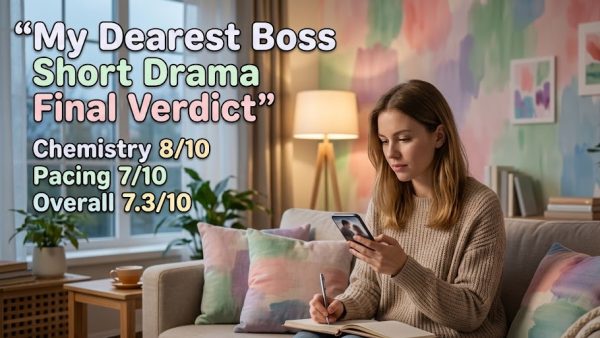
So, how does it score?
| Bingeability Factor | Score | Why It Works |
| Pacing | 9/10 | Major twists arrive quickly |
| Antagonist Factor | 9/10 | Family ambition keeps raising the stakes |
| Romance Tension | 8.5/10 | Benji and Summer constantly shift emotionally |
| Revenge Payoff | 8.5/10 | Secrets eventually become weapons |
| Overall Bingeability | 9/10 | Every reveal creates another question |
Benji Banks Short Drama And The Anatomy Of A Perfect Revenge Story

The smartest thing about the story is that revenge is not treated as a single event. It develops through betrayal, manipulation, social humiliation, and power games. Benji is introduced as an intimidating billionaire figure, while Summer becomes trapped between an agreement, her feelings, and people who want to control the situation around her.
That gives the plot several emotional engines at once.
1. The Surrogacy Deal Creates The First Power Imbalance
Summer’s position immediately puts her at a disadvantage. The arrangement begins as something transactional, but her feelings make the agreement much more complicated.
The story uses that imbalance effectively because viewers know that money and power are not the same thing as emotional control. Benji may have influence over the studio and enormous wealth, but that does not automatically mean he can control what Summer feels.
That contradiction becomes one of the story’s strongest hooks.
2. Maxine Turns Family Ambition Into A Real Threat
Maxine is not simply a jealous relative standing in the background. Her ambition is connected to the future of the family business and the question of who deserves power.
At one point, the succession conflict becomes explicit when Benji is announced as the new CEO of Studio E&N. Maxine’s frustration therefore has a concrete target rather than being vague family drama.
This is where the revenge mechanism becomes more interesting. The characters are not only fighting over love. They are fighting over status, inheritance, reputation, and control.
3. Public Exposure Becomes The Ultimate Weapon
The most satisfying revenge stories understand that secrets become more powerful when they are exposed in front of other people.
That idea reaches its peak when Summer is pushed toward a camera and pressured to describe her relationship with Benji as purely transactional. The scene turns a private relationship into a public spectacle, which is exactly the kind of escalation short dramas need.
The threat is no longer simply, “Will they stay together?”
It becomes, “What happens when everyone finds out?”
4. The Revenge Is Emotional Before It Is Strategic
This is an important distinction. The strongest moments are not necessarily the scenes involving business or money. They are the moments when characters realise that someone they trusted has been using them.
That emotional betrayal gives the revenge plot weight. Without it, the story would simply be a succession battle with romantic decoration.
Here, romance is part of the weapon.
Revenge Series Review Through Three Bingeable Tropes
A useful revenge series review should look beyond whether the story is realistic. Short dramas operate on heightened emotions, quick reversals, and characters who often make decisions that seem outrageous precisely because the story needs another twist.
The three strongest tropes here are especially effective because they overlap rather than operate separately.
The Cold Billionaire Who Has More Feelings Than He Admits
Benji fits the familiar cold-billionaire archetype. He is powerful, demanding, and initially presented as someone who can make people disappear from his professional world with a decision.
The contrast becomes entertaining when his emotional vulnerability starts appearing around Summer. A man who can control a company cannot simply order himself to stop caring about someone.
That contradiction is catnip for short-drama audiences.
The Surrogate Who Was Supposed To Stay Temporary
The surrogacy setup gives the romance an expiration date from the beginning.
Summer is initially connected to Benji through an agreement. Yet the emotional relationship develops beyond the original terms. In the story, Summer eventually makes it clear that the relationship has become genuine rather than merely financial.
That is a familiar trope, but the short format makes it work because the audience does not have to wait through twenty episodes for the relationship to change.
The Family Member Who Wants The Throne
Maxine represents another classic short-drama ingredient: the person who believes the protagonist’s success should have been theirs.
Her desire to secure the CEO position turns the family into part of the central conflict. She is not fighting from the sidelines. She actively looks for ways to undermine Benji and Summer.
The result is a story where romance and corporate succession keep feeding each other.
Pacing Analysis Of The Twists That Keep The Story Moving
The biggest advantage of this format is speed. A conventional drama might spend several episodes establishing a secret. Here, a secret can appear, explode, and create a new problem within minutes.
That makes the pacing analysis surprisingly positive despite the story’s deliberately exaggerated style.
A few techniques are doing most of the work:
- Immediate stakes keep scenes from feeling disposable.
- Frequent revelations give viewers a reason to continue.
- Relationship reversals prevent the romance from becoming predictable.
- Public confrontations make private secrets feel larger.
- Business stakes add consequences beyond the love story.
- Cliffhanger-style transitions encourage one-more-episode behaviour.
The pacing is particularly effective because the story does not rely on one mystery alone. When one question is answered, another appears.
Who will control the company?
Can Summer and Benji actually trust each other?
What is Maxine planning?
What happens when the public learns the truth?
Each answer opens another door.
Why The Antagonist Has To Be This Bad
Short revenge stories have a strange requirement. The villain usually needs to be bad enough that viewers stop asking whether everyone could simply talk things out.
Maxine’s manipulation serves that purpose.
Her willingness to use secrets, relationships, and public pressure gives the audience someone to blame. That is important because revenge only feels satisfying when viewers believe the target deserves consequences.
A softer antagonist would reduce the emotional payoff.
Why The Public Reveal Works Better Than A Private Argument
A private confrontation can be dramatic, but public humiliation raises the stakes instantly.
The studio setting is especially useful because reputation matters there. A relationship scandal is no longer just personal when cameras, colleagues, family members, and professional ambitions are involved.
That is why the public reveal functions as more than a twist. It changes the battlefield.
Character Chemistry And The Romance Under Pressure
The biggest surprise in the story is that the romance works best when Benji and Summer are not completely aligned.
Their character chemistry comes from the gap between what they say and what they actually feel.
Benji tries to maintain control. Summer questions whether she is merely another piece in his larger plan. Their conversations therefore carry tension even when nothing explosive is happening.
One of the clearest examples comes after Benji becomes CEO. Summer questions whether she was simply a piece in his game, while Benji responds that having the company and the baby is still not everything he wants. He then admits that losing her is what actually matters to him.
That moment works because the story finally turns the billionaire fantasy on its head.
Benji’s Biggest Weakness Is Not His Enemies
His biggest weakness is emotional attachment.
That makes him more interesting than a completely invincible billionaire character. He can fire employees, acquire companies, and dominate a boardroom, but none of that helps when Summer believes she is being treated as a tool.
Power cannot solve a trust problem.
Summer Gives The Romance Its Emotional Centre
Summer is important because she has something to lose beyond money.
Her position forces her to question what the agreement actually means, what happens to the baby, and whether Benji genuinely cares about her. The story repeatedly pushes her between practical survival and emotional honesty.
That conflict gives the romance a reason to exist beyond the billionaire fantasy.
Maxine Changes The Meaning Of Their Relationship
Without Maxine, Benji and Summer could simply become another rich-man-meets-outsider romance.
With Maxine involved, their relationship becomes a threat to someone else’s ambition.
That creates pressure from outside the couple, which is exactly what a bingeable romance needs.
The Chemistry Works Because Nobody Is Fully Safe
This is where character chemistry becomes more than flirting.
Every relationship is unstable. Trust can disappear after one revelation. A family member can become an enemy. A professional decision can affect a romantic relationship.
That instability makes even familiar scenes feel more urgent.
Watch Recommendation Based On The Bingeability Scorecard
As a watch recommendation, this drama is best suited to viewers who enjoy fast-moving billionaire romance, revenge plots, family power struggles, secret relationships, and dramatic public reveals.
It is not the best choice if the goal is subtle realism. Characters are intentionally heightened, conflicts escalate quickly, and emotional reactions are often larger than life.
But if the goal is entertainment, the formula is easy to understand.
The strongest reasons to watch are:
- Fast pacing that rarely lets the central conflict sit still.
- High-stakes romance built around trust rather than simple attraction.
- A clear antagonist whose ambition keeps creating new problems.
- Corporate power games that give the romance additional stakes.
- Public revelations that turn private secrets into major confrontations.
- A satisfying emotional direction where money eventually becomes less important than personal loyalty.
For viewers who specifically enjoy hidden-identity billionaire stories, the same short-drama ecosystem also leans heavily on that trope, making this CEO hidden identity trope a useful comparison point when looking for similar setups.
The pacing analysis ultimately comes down to one simple observation: the story understands that short-form viewers do not want to wait forever for the next reveal.
The Score Is High Because The Story Knows Its Audience
The final score of 9/10 is less about whether every plot development would happen in real life and more about whether the drama accomplishes what it sets out to do.
It does.
The revenge structure creates anger. The romance creates emotional investment. The family conflict creates stakes. The cliffhangers create momentum.
Put those four things together and you get a drama that is very easy to binge.
Who Should Skip It
There are a few reasons someone might not enjoy it.
- Viewers who prefer slow-burn character development may find the pace too aggressive.
- People looking for realistic corporate drama may find the CEO politics exaggerated.
- Anyone tired of billionaire romance tropes may recognise the formula immediately.
- Viewers who dislike public confrontation and melodrama may find some scenes too intense.
For everyone else, the exaggerated style is part of the fun.
Q&A
Is Benji Banks Actually The Villain Of The Story?
Not really. Benji is initially framed as intimidating and emotionally cold, but the central threat comes more strongly from manipulation within his family and the people attempting to control his relationship with Summer. His character gradually shifts from powerful billionaire stereotype to someone with genuine emotional vulnerability.
Why Does The CEO Conflict Matter To The Romance?
Because the relationship affects more than Benji and Summer. Benji’s position as the new CEO changes the balance of power inside his family, while Maxine’s ambitions give her a reason to interfere. The romance therefore becomes connected to succession, reputation, and family control rather than existing in isolation.
Is The Ending More About Revenge Or Romance?
The emotional payoff leans toward romance. Revenge and exposure drive much of the tension, but the story repeatedly brings the focus back to whether Benji and Summer genuinely choose each other once money, status, and manipulation are stripped away. That is ultimately what makes the conclusion more satisfying than a simple villain-punishment ending.



Leave a Reply