The Microtransaction Trap of Unlocking Short Drama Episodes
Short drama apps have turned the old cliffhanger into something more powerful than a storytelling trick. unlocking short drama episodes can become the moment when entertainment quietly turns into a spending decision. A viewer may pay a few dollars here, another small coin pack there, and barely register the total until the receipts start adding up. The trick is not necessarily that every purchase is expensive. It is that each individual payment feels too small to trigger serious financial resistance.
That mechanism has a familiar cousin: the casino. Casinos do not need every bet to feel financially painful. The system works better when each decision feels manageable, immediate and emotionally charged. Short-drama apps can create a similar loop with virtual coins, locked episodes, reward ads and strategically timed cliffhangers. A 2026 study involving 240 Indonesian users across 12 short-drama applications, including DramaBox, ReelShort, ShortMax, MoboReels and FlexTV, specifically examined payment behavior, satisfaction and post-purchase regret under freemium models.
The important distinction is that short dramas are not inherently deceptive, and paying for entertainment is not automatically a problem. The concern is the combination of microtransaction psychology, emotional storytelling and interface design that can make spending feel almost invisible.
The Casino Psychology Behind Microtransaction Psychology
The strongest part of the model is not the coin itself. It is the timing.
Imagine a 70-episode vertical drama. The first few episodes establish the characters, then the protagonist discovers a secret, confronts an enemy or finally kisses the person viewers have been waiting for. The episode cuts away at exactly the moment the emotional tension peaks.
Then the screen changes.
Unlock Episode.
That button appears when the brain is already looking for resolution.
This is where microtransaction psychology becomes useful for understanding the business model.
Why tiny payments feel safer than one large payment
A $2 or $5 purchase can feel dramatically different from a $50 purchase, even when several smaller transactions eventually reach the same amount.
The mental calculation often becomes:
- “It is only a few dollars.”
- “I already watched this far.”
- “I just want to know what happens.”
- “I can stop after this episode.”
- “I will use the remaining coins later.”
The problem is that the decision is being made episode by episode rather than series by series.
That makes the total cost harder to feel emotionally.
The sunk cost arrives before the payment
By the time an episode becomes locked, viewers have already invested time.
They know the characters.
They understand the conflict.
They have developed expectations.
Walking away now means abandoning an unfinished emotional experience. The payment is therefore not simply buying video. It feels like buying the conclusion to something the viewer has already started.
That is a much stronger psychological proposition than simply saying, “Pay to watch a TV show.”
The coin system adds another layer
Virtual currency creates distance between money and the content.
Instead of seeing “This episode costs $1.80,” users may see a coin requirement. They then purchase a bundle containing more coins than they immediately need.
DramaBox, for example, officially describes coins as virtual currency used to unlock premium episodes, while its terms state that coin prices and promotional offers can change.
The psychological distance matters because the transaction is no longer mentally framed as cash leaving a bank account. It becomes coins disappearing from a digital balance.
The real danger is repetition
One purchase is rarely the interesting part.
The more revealing question is what happens after 10, 20 or 40 unlocks.
A short drama may have dozens of episodes, and the format is designed around frequent continuation points. Industry material describing short-drama monetization explicitly discusses coin wallets, per-episode unlocks and interfaces that prompt the next unlock around cliffhangers.
That turns the viewing experience into a repeated sequence of emotional decisions.
Cliffhanger Monetization Turns Suspense Into a Payment Trigger
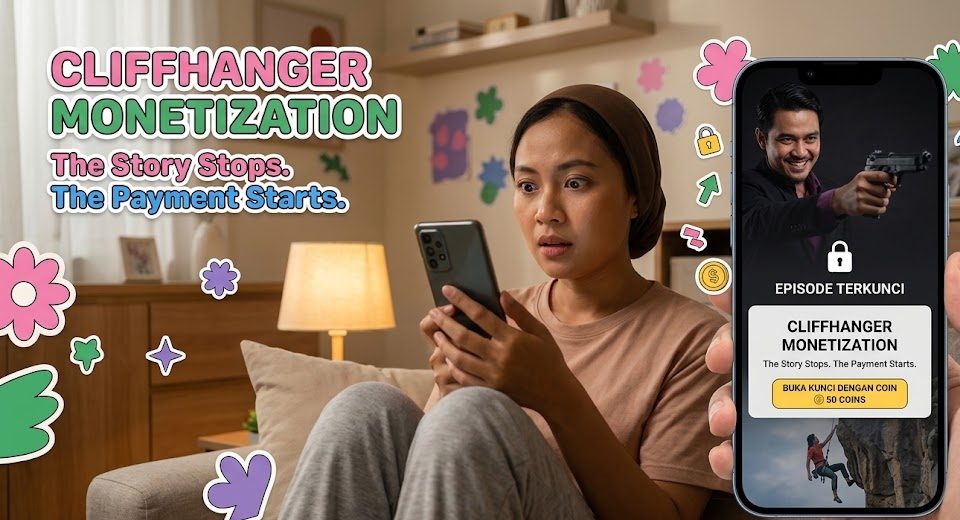
A cliffhanger normally has one job: make viewers want the next episode.
Short-drama platforms can give that cliffhanger a second function. It can become the exact moment when the user is asked to spend.
This is cliffhanger monetization at its most obvious.
The storytelling and payment architecture become closely connected.
The unlock button appears at the worst possible moment
Suppose an episode ends with a woman opening a mysterious letter. She reads the first line. Her expression changes.
Cut.
Locked episode.
That interruption is more powerful than placing a paywall before the scene because the viewer has already received the emotional promise.
The interface essentially says: you are one tap away from resolution.
That does not mean the platform has secretly manipulated the story. Cliffhangers are normal storytelling. The issue is what happens when the cliffhanger is consistently synchronized with a purchase prompt.
Short episodes make the loop faster
Traditional television might give viewers 30 to 60 minutes before a major commercial break or episode ending.
Vertical dramas can compress major story beats into episodes lasting only a few minutes, with some viewer reports describing episodes around a minute long. App-store reviews for DramaBox also show complaints about paying or watching ads for very short episode segments, although those reviews represent individual experiences rather than universal pricing.
That creates a much faster decision cycle.
Watch.
Cliffhanger.
Unlock.
Watch.
Cliffhanger.
Unlock again.
The speed itself can reduce the time available to reconsider the purchase.
Viral stories make the effect stronger
The stories that spread fastest on social media often rely on extreme hooks: secret heirs, billionaire romances, revenge, forced marriages, supernatural identities and sudden betrayals.
Those themes are built for rapid emotional escalation.
When a story has already gone viral, viewers may also feel social pressure to find out what everyone else is talking about. The result is a perfect environment for repeated spending.
It is not just about DramaBox
DramaBox is one visible example, but the model extends across the wider short-drama ecosystem. ReelShort also uses virtual currency and advertising as ways to access episodes, while subscription models can provide another route to continued viewing.
That makes the issue bigger than any single application.
The business model itself deserves attention.
Paying for Content Without Losing Control of the Budget
Paying for entertainment is normal. Netflix, cinema tickets, books, games and music subscriptions all cost money.
The difference with short-drama apps is the frequency of the payment decision.
When deciding whether paying for content is worth it, the useful question is not “Is this episode cheap?”
Ask instead:
How much will finishing this story cost me?
That number is far more meaningful.
Calculate the finish cost before buying more coins
Use a simple calculation:
Remaining episodes × average unlock cost = estimated remaining spending
If the platform uses coins:
Coins needed to finish ÷ coins included in your current balance = approximate number of unlock cycles
Then convert the coin packs back into actual currency.
A simple budget table can look like this:
| Viewing situation | What to calculate | Better question |
| 5 locked episodes | Episode cost × 5 | Is the ending worth this amount? |
| 20 locked episodes | Episode cost × 20 | Would another option cost less? |
| 50+ locked episodes | Total remaining cost | Is a subscription better? |
| Multiple unfinished dramas | Cost of each series | Am I paying because I actually want them? |
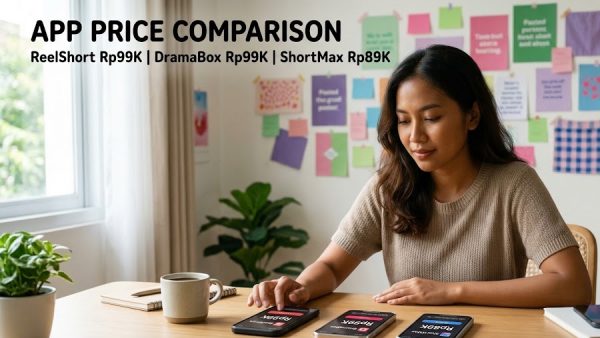
The exact price varies by platform, country, promotion and payment method. DramaBox’s terms explicitly note that coin pricing can vary by region and promotional offer.
Compare coins with subscriptions
A subscription can sometimes make more sense for heavy viewers, but “subscription” does not automatically mean “better.”
Check:
- How long the subscription lasts
- Whether it unlocks all dramas or selected content
- Whether auto-renewal is enabled
- The renewal price after an introductory offer
- Whether unused coins remain available
- Whether your viewing habits justify recurring payments
For example, an independent 2026 pricing tracker reported substantial differences between coin packages and subscription options on DramaBox, illustrating why the headline price alone is not enough to judge value.
If the decision is between repeatedly buying coins and paying for a subscription, the right answer depends on how much you actually watch.
Watch the free portion before spending
This is probably the easiest rule.
Do not buy a large coin package simply because the trailer looks addictive.
Finish the free episodes first.
Ask whether the story is still good after the initial hook.
A great opening does not guarantee a satisfying middle or ending. Some viewers may discover that the story becomes repetitive once the original mystery is resolved.
And if the subscription question is specifically about DramaBox, comparing the actual benefits before paying is much more useful than assuming the subscription automatically offers better value. A dedicated breakdown of the DramaBox subscription and its value can help frame that decision around viewing habits rather than impulse.
Digital Addiction Is About the Loop Not the Drama
The phrase digital addiction should be used carefully. Watching a lot of short dramas does not automatically mean someone has an addiction.
The more useful concept here is the reinforcement loop.
The viewer receives:
- A quick emotional reward
- A cliffhanger
- A locked episode
- An opportunity to unlock
- Immediate resolution
- Another cliffhanger
Then the cycle starts again.
The short episode format makes this loop unusually compact.
Variable rewards keep the viewer curious
Not every episode delivers the same emotional payoff.
One may reveal a secret.
Another may introduce a new rival.
Another may end with a kiss.
Another may expose a betrayal.
Because viewers do not know which episode will deliver the next major payoff, continuing to watch can feel more compelling than the actual quality of the current episode.
This is similar to a broader principle in digital products: unpredictable rewards can be more attention-grabbing than predictable ones.
Emotional urgency beats financial reflection
The purchase prompt does not usually arrive when the viewer is calmly reviewing their monthly budget.
It arrives when they are emotionally activated.
Angry.
Curious.
Excited.
Shocked.
Romantically invested.
That timing matters.
A calm decision might be “I have spent $12 today, so I should stop.”
An emotionally activated decision might be “I only need one more episode.”
The second thought feels smaller because it focuses on the immediate moment rather than cumulative spending.
A practical stopping system
Create the limit before starting the series.
For example:
My short-drama budget: $10
Once that amount is reached, stop and reassess.
Other useful rules include:
- Never buy coins while angry or excited
- Avoid buying the largest coin pack simply because its unit price looks better
- Screenshot the price before purchasing if the pricing is confusing
- Check subscription renewal terms
- Track purchases outside the app
- Do not start several paid series at once
- Take a break after finishing a major cliffhanger
The goal is not to stop enjoying short dramas.
It is to put the viewer back in control.
How to Enjoy Short Dramas Without Letting Unlocks Snowball
The smartest response is not necessarily deleting every short-drama app.
For many viewers, the stories are simply entertainment. The better approach is to separate story value from payment pressure.
Before unlocking an episode, ask three questions:
Do I actually want this episode?
Not “Do I need to know what happens?” Those are different questions.
How much will finishing the series cost?
Do not judge the next unlock in isolation.
Would I still pay this amount if the episode were presented in normal currency instead of coins?
That last question is especially useful because it removes some of the psychological distance created by virtual currency.
Use ads and free rewards deliberately
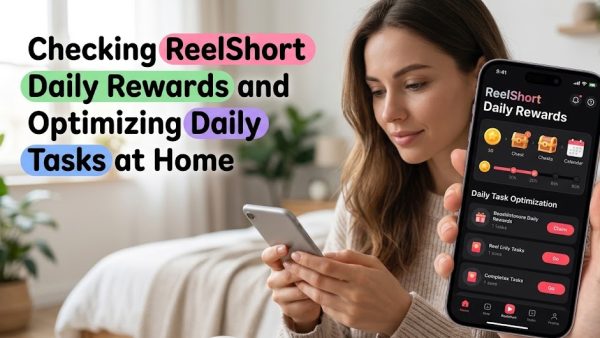
Some platforms offer ad-supported unlocks or rewards. DramaBox, for example, has described watching advertisements and collecting free coins as alternatives to directly purchasing access.
These options are not literally free because time and attention have value.
Still, they can be useful if the goal is to watch without spending money.
The key is knowing what you are trading.
Money is not the only currency in a short-drama app.
Time is one too.
Treat the ending as part of the purchase decision
A story with 80 episodes may look cheap when the first few are free.
But the real product is not episode one.
It is the complete viewing journey.
That is why viewers should evaluate:
- Total episode count
- Free episode count
- Unlock requirements
- Subscription cost
- Ad requirements
- Estimated cost to finish
- Renewal conditions
- Whether the ending is actually worth reaching
The business model works best when viewers think one episode at a time.
Consumers protect themselves better when they think about the entire series.
The simplest rule is surprisingly effective
If a cliffhanger makes you want to pay immediately, wait five minutes.
Close the payment screen.
Calculate the remaining cost.
Then decide.
If you still want to pay after the emotional rush has cooled, it is much more likely to be a conscious entertainment purchase rather than an impulse purchase.
That distinction matters.
Short dramas are designed to make us care what happens next. That is good storytelling.
The problem starts when every “what happens next?” is automatically converted into “pay now.”
The smartest viewer is not the person who never spends money.
It is the person who knows exactly why they are spending it.
Q&A
Is unlocking short drama episodes always a bad financial decision?
No. Paying for a series can be perfectly reasonable when the total cost fits your entertainment budget. The concern is repeated micro-purchases that make cumulative spending difficult to notice.
Why do short dramas use coins instead of normal prices?
Coins create a virtual layer between real money and individual episodes. They can also support flexible pricing, bonuses and different purchase bundles. However, viewers should still translate the coin cost into real currency before deciding.
How can I tell whether a short-drama subscription is worth it?
Calculate how much you expect to watch during the subscription period and compare that with the estimated coin cost of finishing those same dramas. Also check auto-renewal, renewal pricing and exactly what the subscription unlocks.

Leave a Reply